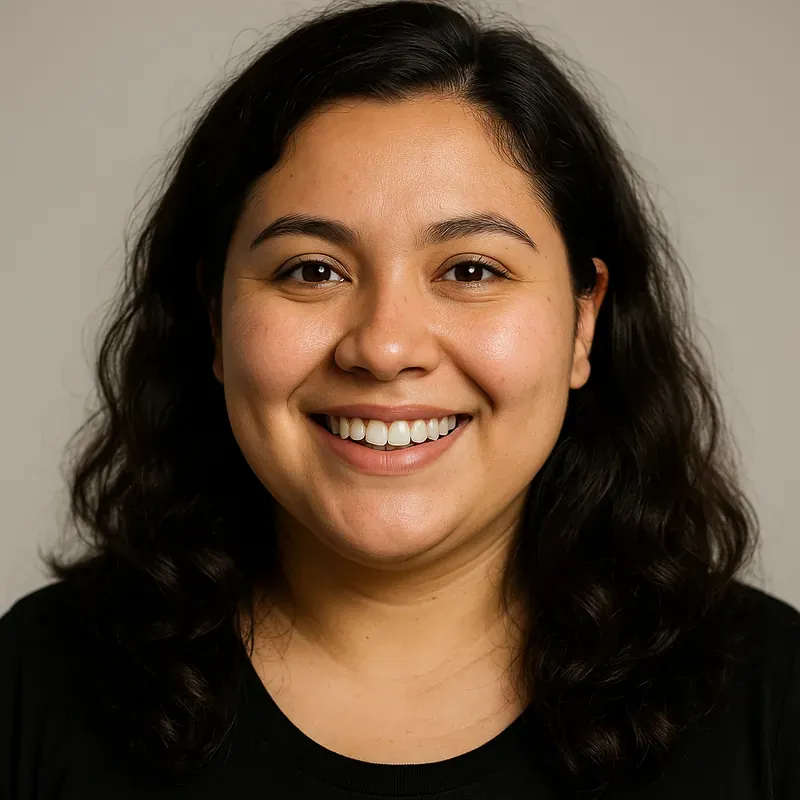
Why Brands Are Switching to AI Influencer Marketing
The economics and effectiveness of synthetic creators
Traditional influencer marketing costs brands $10K–$100K per post from mid-tier creators (100K–1M followers), with unpredictable ROI. A typical campaign workflow takes 6 weeks from outreach to post, at high cost, for a single piece of content.
AI influencer marketing flips the economics:
- Cost per post: $500–$2K (one-time setup, then $100–$500 per post for scaling)
- Timeline: 2 weeks from concept to first post
- Control: brands control messaging, posting schedule, platform mix, and A/B testing in real-time
- Performance: AI influencers post 3–5x daily consistently vs. 3–5x weekly for humans (70% more volume)
- Compliance: AI influencers auto-generate FTC-compliant disclosures with zero drama
Example: A fintech brand spent $50K on traditional influencers (5 posts, 3 months, 2M impressions). With an AI influencer at $5K upfront + $3K/month: 90 posts over 3 months, 15M+ impressions, 50K+ qualified leads.
Brands aren't replacing human influencers entirely; they're allocating 40–60% of influencer budgets to AI for volume campaigns, keeping 40–60% for human influencers in deep storytelling contexts.
Types of AI Influencer Marketing Campaigns
Campaign architectures proven to work
Product Launch Campaigns Brand creates 1–2 AI personas as product spokespeople. Pre-launch teasers (2 weeks, 15 posts) → Launch day burst (5–10 posts in 24 hours) → Post-launch reviews (3 months, 90 posts). Typical reach: 10–50M impressions. Conversion: 2–5% of engaged viewers.
Thought Leadership Campaigns Brand creates an AI expert persona (finance advisor, tech analyst, career coach). Posts high-value insights daily. Builds credibility and top-of-funnel awareness. Typical reach: 5–20M impressions. Lead generation: 5K–20K qualified leads.
Community Activation Campaigns Brand creates AI personas that host challenges, Q&As, and contests. Drives user-generated content and community participation. Typical reach: 5–15M impressions. Engagement: 10K–50K UGC submissions.
Affiliate Marketing Campaigns Brand partners with existing AI influencers to promote products. AI creators receive 5–30% commission per sale. Scales to 50–500 affiliate partnerships. Typical reach: 20–100M impressions (aggregate).
Retention & Cross-Sell Campaigns Brand uses AI personas to re-engage past customers and encourage repeat purchases. Targeted email + social sequences. Typical conversion: 15–25% repeat purchase rate (2–3x better than email alone).
Localized Campaigns Brand creates region-specific AI personas (e.g., "Mira" for India, "Carlos" for Latin America) with culturally tailored content. Breaks language and cultural barriers at scale.
How to Launch Your First AI Influencer Campaign
Step-by-step execution framework
Phase 1: Strategy & Persona Definition (Week 1–2)
- Define the goal: awareness, leads, sales, or retention. Pick the KPI.
- Define the target audience: demographics, psychographics, platform behavior.
- Create the AI persona: name, appearance, voice, personality, unique angle.
- Identify content pillars: 5–7 core content types.
- Map out platforms: TikTok + YouTube Shorts for awareness, Instagram for consideration, LinkedIn for B2B.
Phase 2: Content Planning & Automation Setup (Week 2–3)
- Create a content calendar (90 days).
- Batch-create 90 posts (content templates, visuals, captions, CTAs).
- Set up automation tools: scheduling software, CRM integration, analytics dashboards.
- Build landing pages or lead magnets that posts drive to.
- Set up tracking: UTM codes, custom links, conversion pixel.
Phase 3: Campaign Launch (Week 3–4)
- Publish first 5–10 posts live (not scheduled). Monitor comments and early engagement. Respond to 100% of comments.
- A/B test post times, hashtags, and copy variations.
- Engage daily: reply to DMs, answer questions, build community.
- Run weekly optimization: check top 5 posts, analyze what hooked, iterate.
Phase 4: Scale & Optimize (Week 4+)
- If engagement is 3%+ and CTR is 0.5%+, double posting volume (from 3 to 6 daily).
- Expand to additional platforms if first platform is stable.
- Layer in affiliate partnerships or sponsorships.
- A/B test messaging variations.
Phase 5: Handoff to Operations (Week 8+) Document the persona, content strategy, posting schedule, and performance benchmarks. Transition to monthly strategic reviews.
Launch Your First AI Influencer Campaign Today
Deploy a custom AI persona for your brand. Get full support from strategy to measurement. Start in 2 weeks.
Get StartedMeasuring ROI and Campaign Performance
Metrics, attribution, and benchmarking
Vanity Metrics (track but don't optimize for): Followers, likes, views. Top-of-funnel signals only.
Engagement Metrics (optimize daily):
- Engagement rate: benchmark 3–5% TikTok, 1–3% Instagram
- Save rate: benchmark 0.5–1.5%
- Click-through rate: benchmark 0.3–0.8%
Conversion Metrics (measure weekly):
- Cost per lead: benchmark $0.50–$3 for awareness, $2–$10 for lead-gen
- Cost per acquisition: benchmark 15–40% of customer lifetime value
- ROAS: benchmark 3:1 to 10:1
Retention Metrics (measure monthly):
- Repeat purchase rate from AI-influenced customers: benchmark 15–30%
- Customer LTV of AI-influenced cohort: benchmark 1.5–3x higher than organic
Attribution: Use multi-touch attribution (credit all touchpoints that led to conversion). Example: Customer saw 3 AI influencer posts (40% credit) → clicked email (30%) → clicked ad (20%) → converted (10%).
Benchmarks by vertical:
- SaaS / Finance: ROAS 6:1–12:1
- E-commerce: ROAS 4:1–8:1
- Education: ROAS 8:1–20:1 (high LTV)
- Food & Beverage: ROAS 3:1–5:1
Best Practices and Common Mistakes
What successful campaigns do (and what kills ROI)
Best Practices:
- Narrow Niche Focus — AI influencers dominate narrow niches (not "health" but "sustainable fitness for busy professionals"). Narrow = faster growth + higher engagement.
- Consistency Over Perfection — Post 3–5x daily at 80% polish. Volume + consistency beats perfection every time.
- Data-Driven Iteration — Measure daily. If engagement drops below 2%, audit last 10 posts immediately.
- Community Engagement First — Spend 30–40% of effort on engagement (replies, DMs, comments).
- Transparent About AI — Disclose "Created with AI" in bio. Audiences trust transparency.
- Platform-Specific Content — Don't copy-paste. Tailor hooks, length, captions per platform.
- Monetize Early — Collect emails at 100 followers. Launch affiliate promotions at 500. Start sponsorships at 1K.
- Long-Term Thinking — Plan for 12–24 months. Campaigns that show ROI in month 1 often plateau at month 3–4.
Common Mistakes:
- Posting Inconsistency — Dropping from 5x daily to 1x daily kills algorithmic growth. Commit to a schedule.
- Ignoring Comments — Brands that don't reply see 30–50% lower engagement week-over-week.
- Weak CTAs — "Check out our product" gets 0.1% CTR. Specific value propositions get 0.6%+.
- Neglecting Trends — Ignoring trending sounds/formats leaves 50%+ reach on the table.
- No Email Funnel — Social-only growth plateaus at 50K–100K. Email list is your asset. Start collecting at 100 followers.
- No Contingency Plan — If one platform algorithm changes, have a backup. Diversify.
Access Campaign Performance Benchmarks
See how brands in your vertical are using AI influencers. Learn proven ROI models and measurement frameworks.
Get Started